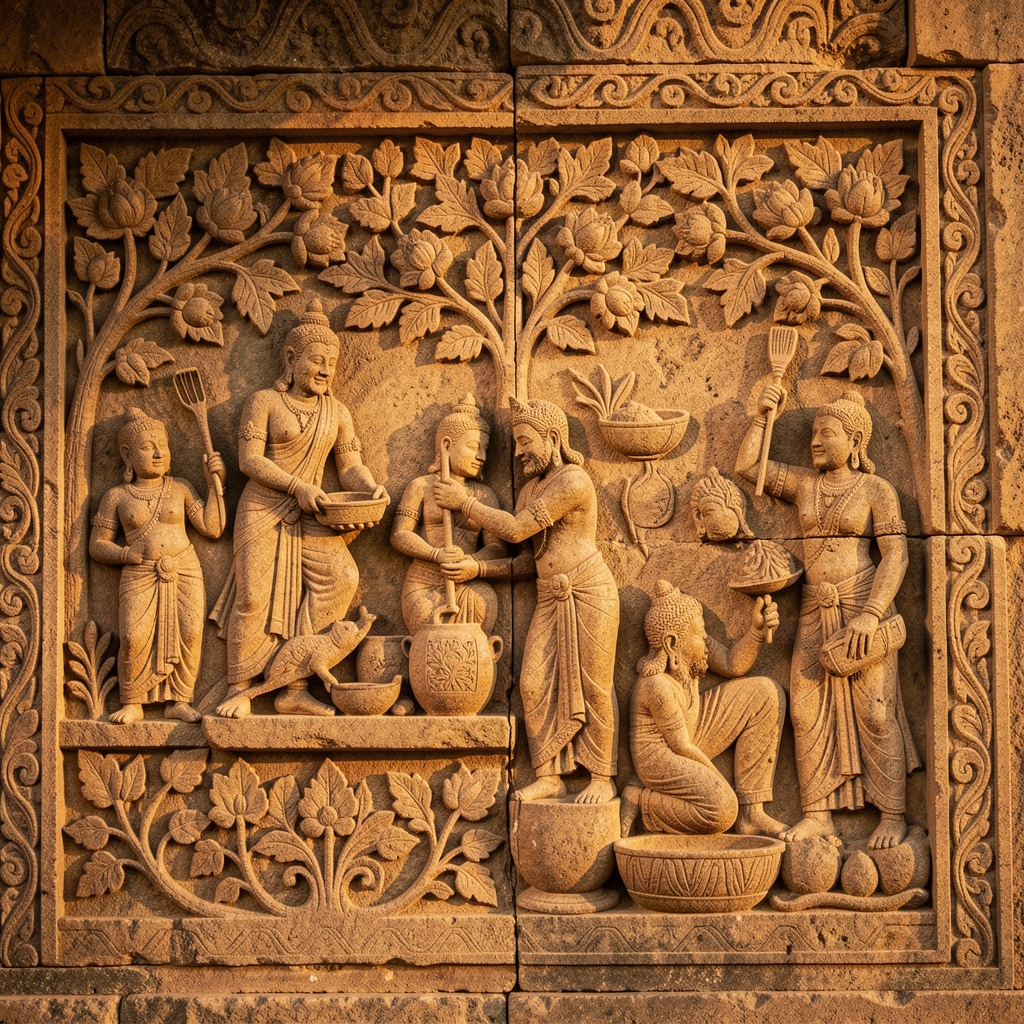
Throughout recorded history, every major civilisation has developed its own framework for understanding what sustains male vitality. These frameworks varied enormously in their vocabulary, their empirical basis, and their cultural assumptions — yet they share a common concern: the relationship between how men lived, what they consumed, and how their bodies responded over time. Examining this history offers a useful perspective on how contemporary discussions about men's well-being have arrived at their current form.
Ancient Frameworks: Elemental Balance
The oldest systematic approaches to male vitality were embedded within broader cosmological frameworks. Greek medical writing, particularly the tradition attributed to Hippocrates and later elaborated by Galen, organised the body around four humours — blood, phlegm, yellow bile, and black bile — each associated with particular qualities of temperature and moisture. A man's physical vigour was understood as an expression of the balance between these humours, which was in turn influenced by seasonal change, diet, occupation, and age.
Galen's dietary recommendations for male athletes in the second century distinguished between foods understood to build the "pneuma" — the vital force — and those thought to deplete or disturb it. The framework was philosophical as much as observational.
Ayurvedic traditions in the Indian subcontinent developed a parallel but distinct system. The concept of ojas — a refined essence produced from the digestion of food — occupied a central place in descriptions of male vitality. Dietary guidance in classical Ayurvedic texts organised foods by their qualities of heaviness, warmth, and moisture, and described how different combinations interacted with an individual's constitutional type, or prakriti. This emphasis on constitutional variation is notable: rather than prescribing a universal diet, the framework acknowledged that different individuals required different approaches.
Chinese classical medicine, drawing on concepts of qi and the complementary forces of yin and yang, similarly described male vitality as a dynamic equilibrium rather than a fixed state. Foods were categorised by their energetic qualities — warming, cooling, tonifying, dispersing — and the goal of dietary practice was to maintain or restore a condition of harmonious circulation, particularly of what texts referred to as jing, sometimes translated as "essence" and associated with reproductive and physical vitality in men.
Medieval Syntheses: Practical Knowledge and Philosophical Order
The medieval period in both Europe and the Islamic world saw a significant synthesis of classical Greek knowledge with local observational traditions. Islamic scholars, including Ibn Sina (Avicenna), wrote extensively on diet and male vitality in works that drew on Galenic theory while incorporating a substantial body of practical clinical observation. Ibn Sina's Canon of Medicine includes detailed discussions of foods that were believed to sustain vitality across different life stages, with particular attention to the changes experienced in middle and later adulthood.
Ibn Sina noted that the dietary needs of men shifted markedly after the age of forty, recommending a reduction in heavy foods and an increase in lighter, more easily digested preparations. The reasoning was physiological — a gradual cooling and drying of the body's constitution — but the practical guidance shows considerable observational sophistication.
In European monastic contexts, dietary regulation was intertwined with religious observance. The Rule of Saint Benedict prescribed fasting periods and meal structures that, while spiritually motivated, incidentally created systematic variation in dietary intake across the calendar year. Monastic infirmaries developed practical knowledge about how different foods affected physical condition, and this knowledge circulated through herbarium literature — written compilations of plant-based food preparations and their observed effects.
The Early Modern Period: Systematic Observation Begins
The sixteenth and seventeenth centuries brought significant changes to how vitality was studied. The development of anatomical investigation — most famously in the work of Vesalius — shifted medical thinking toward a more structural understanding of the body. At the same time, the expansion of European trade brought new foods into contact with existing dietary frameworks, prompting new observations and adjustments to received wisdom.
Dietary writing from this period frequently addressed the question of how men engaged in physically demanding activities — military service, agricultural labour, seafaring — could sustain their physical capacity. Naval records in particular provide remarkably consistent documentation of how dietary deficiency manifested in the physical deterioration of crews on extended voyages, though the underlying mechanisms were not yet understood in modern nutritional terms.
Naval surgeons of the seventeenth and eighteenth centuries recorded the progressive physical decline of sailors deprived of fresh provisions over extended periods. Their descriptions — frailty, pallor, bleeding gums, fatigue — represent some of the earliest systematic documentation of what would later be recognised as dietary deficiency states.
The Nineteenth Century: Towards Nutritional Science
The nineteenth century saw the first serious attempts to identify the specific components of food responsible for maintaining physical capacity. German chemist Justus von Liebig proposed a classification of food substances into proteins, fats, and carbohydrates — a framework that, while subsequently revised and extended, established the basis of modern nutritional thinking. At the same time, physiologists began measuring energy expenditure and attempting to calculate the dietary requirements of men engaged in different levels of physical activity.
Population-level observation also became increasingly possible. Industrialisation created large concentrations of working-age men whose physical condition could be assessed at scale — in factory records, military conscription medical examinations, and emerging public health surveys. These sources revealed striking variations in physical condition associated with differences in diet and living environment, providing empirical grounding for what had previously been largely theoretical frameworks.
The Twentieth Century and the Emergence of Modern Complexity
The discovery of vitamins in the early twentieth century transformed nutritional science. The recognition that small quantities of specific compounds were essential for physical function — and that their absence could produce specific and reversible deficiency states — provided a new framework for understanding the relationship between diet and vitality. This framework proved enormously productive for public health: the fortification of staple foods and the elimination of classical deficiency diseases in many populations represents one of the more significant achievements of applied nutritional science.
However, the reductionist logic of vitamin science — the idea that health could be understood as a function of specific compounds in isolation — also introduced a tendency toward oversimplification that has been a recurring theme in nutritional debate ever since. The second half of the twentieth century saw increasing recognition of the complexity of dietary interaction, the importance of food patterns rather than individual components, and the significant role of non-dietary factors — physical activity, sleep, social environment, stress — in shaping physical well-being.
Reading Historical Accounts Critically
Any careful reading of historical accounts of male vitality must acknowledge the limitations of these sources. Ancient and medieval frameworks operated without the tools of modern chemistry or physiology; their observations were often acute, but their explanatory categories were shaped by philosophical assumptions that modern science has largely superseded. At the same time, dismissing historical frameworks entirely would be a mistake: cross-cultural consistency in observing the effects of dietary diversity, physical activity, and seasonal variation suggests that these sources contain genuine observational content, even where the explanatory language is dated.
The most useful posture toward this material is one of informed critical engagement — taking seriously the observational content of historical accounts while remaining alert to the ways in which cultural assumptions and philosophical categories shaped both what observers recorded and how they interpreted it. This kind of reading enriches the contemporary understanding of men's well-being by showing how varied and context-dependent the study of the subject has always been.